Contemporary witnesses
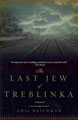
The Last Jew of Treblinka: A Memoir, Pegasus Publisher
Quickly becoming a cornerstone of Holocaust historiography – a devastatingly stark memoir from one of the lone survivors of Treblinka.
Why do some live while so many others perish? Tiny children, old men, beautiful girls. In the gas chambers of Treblinka, all are equal. The Nazis kept the fires of Treblinka burning night and day, a central cog in the wheel of the Final Solution.
In the tradition of Elie Wiesel’s Night and Primo Levi’s Survival at Auschwitz and The Drowned and the Saved, Rajchman provides the only survivors’ record of Treblinka. Originally written in Yiddish in 1945 without hope or agenda other than to bear witness, Rajchman’s tale shows that sometimes the bravest and most painful act of all is to remember.
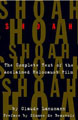
SHOAH: The Complete Text Of The Acclaimed Holocaust Film,
Da Capo Press
«There were many moments of despair,’’ Claude Lanzmann says of his film, which was shot between 1976 and 1981. «I was often discouraged, because the difficulties were so numerous and so big. It was hard work. But there was no other way. Otherwise there wouldn’t have been a film. So it was my duty to remain impassive and not become overwhelmed by what I was doing or by the heavy weight of the emotions»…
«In order to do such a film, to work 11 years to produce something like this,» he says, «time has to stop. And time stopped for me.»
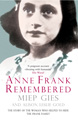
Anne Frank Remembered The Story of the Woman Who Helped to Hide the Frank Family, Simon & Schuster Publishers
For the millions moved by Anne Frank: The Diary of a Young Girl, here at last is Miep Geis’s own astonishing story. For more than two years, Miep Gies and her husband helped hide the Franks from the Nazis. Like thousands of unsung heroes of the Holocaust, they risked their lives each day to bring food, news, and emotional support to the victims. She found the diary and brought the world a message of love and hope.
«It seems as if we are never far from Miep’s thoughts …Yours, Anne»
From her own remarkable childhood as a World War I refugee to the moment she places a small, red-orange, checkered diary – Anne’s legacy – in Otto Frank’s hands, Miep Gies remembers her days with simple honesty and shattering clarity. Each page rings with courage and heartbreaking beauty.
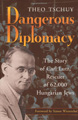
Dangerous Diplomacy: The Story of Carl Lutz,
Rescuer of 62,000 Hungarian Jews, William B. Eerdmans Publishers
Dangerous Diplomacy tells for the first time the courageous story of Carl Lutz (1895-1975), the Swiss diplomat who single-handedly rescued 62,000 Jews from deportation to Nazi concentration camps – a daring action now recognized as the largest, most successful rescue effort ever undertaken in Nazi-dominated Europe. For fifty years this dramatic story has remained dormant in government archives and among family papers. Finally now available in English, this carefully researched biography tells how Lutz, as Swiss Consul in Budapest from 1942 to 1945, defied diplomatic rules and conventions by issuing protective papers for tens of thousands of Hungarian Jews destined for the death camps. At grave risk to his own life, Lutz confronted the Nazi menace face to face, including Edmund Veesenmayer, Hitler’s proconsul in Hungary, Adolf Eichmann’s SS thugs, the Gendarmes, and the Arrow Cross gangs. Incredibly, Lutz was almost completely forgotten by the world after the war, and he was formally reprimanded by his own government for having overstepped his authority. Nevertheless, Yad Vashem recognized him and his first wife, Gertrud, among the first to be honored as «Righteous Gentiles.» Various foreign states have honored him, and his home town, Walzenhausen, made its famous native son an honorary citizen. Lutz was even nominated for the Nobel Peace Prize. Dangerous Diplomacy recounts Carl Lutz’s selfless odyssey with compelling writing complemented by 24 black-and-white photographs. Theo Tschuy’s moving and unforgettable narrative not only clarifies important historical events but also ably recognizes a heroic individual who represented a powerful ray of light amid one of the blackest periods of human history.

The Journal of Hélène Berr (1942–1944) by Hélène Berr,
McClelland & Stewart Publishers
Not since The Diary of Anne Frank has there been such a book as this: The joyful but ultimately heartbreaking journal of a young Jewish woman in occupied Paris, now being published for the first time, 63 years after her death in a Nazi concentration camp.
On April 7, 1942, Hélène Berr, a 21-year-old Jewish student of English literature at the Sorbonne, took up her pen and started to keep a journal, writing with verve and style about her everyday life in Paris — about her studies, her friends, her growing affection for the «boy with the grey eyes», about the sun in the dewdrops, and about the effect of the growing restrictions imposed by France’s Nazi occupiers. Berr brought a keen literary sensibility to her writing, a talent that renders the story it relates all the more rich, all the more heartbreaking.
The first day Berr has to wear the yellow star on her coat, she writes, «I held my head high and looked people so straight in the eye they turned away. But it’s hard.» More, many more, humiliations were to follow, which she records, now with a view to posterity. She wants the journal to go to her fiancé, who has enrolled with the Free French Forces, as she knows she may not live much longer. She was right. The final entry is dated February 15, 1944, and ends with the chilling words: «Horror! Horror! Horror!» Berr and her family were arrested three weeks later. She went — as was discovered later — on the death march from Auschwitz to Bergen-Belsen, where she died of typhus in April 1945, within a month of Anne Frank and just days before the liberation of the camp.
The journal did eventually reach her fiancé, and for over fifty years it was kept private. In 2002, it was donated to the Memorial of the Shoah in Paris. Before it was first published in France in January 2008, translation rights had already been sold for twelve languages.
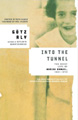
Into the Tunnel: The Brief Life of Marion Samuel, 1931-1943,
Götz Aly, Henry Holt Publishers
A generous feat of biographical sleuthing by an acclaimed historian rescues one child victim of the Holocaust from oblivion
When the German Remembrance Foundation established a prize to commemorate the million Jewish children murdered during the Holocaust, it was deliberately named after a victim about whom nothing was known except her age and the date of her deportation: Marion Samuel, an eleven-year-old girl killed in Auschwitz in 1943. Sixty years after her death, when Götz Aly received the award, he was moved to find out whatever he could about Marion’s short life and restore this child to history.
In what is as much a detective story as a historical reconstruction, Aly, praised for his «formidable research skills» (Christopher Browning), traces the Samuel family’s agonizing decline from shop owners to forced laborers to deportees. Against all odds, Aly manages to recover expropriation records, family photographs, and even a trace of Marion’s voice in the premonition she confided to a school friend: «People disappear,» she said, «into the tunnel.»
A gripping account of a family caught in the tightening grip of persecution, Into the Tunnel is a powerful reminder that the millions of Nazi victims were also, each one, an individual life.
Nazi Germany and the Jews, 1939-1945, Friedlander/Kenan, Harper Collins Publishers
Nazi Germany and the Jews, 1933-1945 is an abridged edition of Saul Friedlander’s definitive Pulitzer Prize-winning two-volume history of the Holocaust: Nazi Germany and the Jews: The Years of Persecution, 1933-1939 and The Years of Extermination: Nazi Germany and the Jews, 1939-1945. The book’s first part, dealing with the National Socialist campaign of oppression, restores the voices of Jews who were engulfed in an increasingly horrifying reality following the Nazi accession to power. Friedlander also provides the accounts of the persecutors themselves-and, perhaps most telling of all, the testimonies of ordinary German citizens who, in general, stood silent and unmoved by the increasing waves of segregation, humiliation, impoverishment, and violence. The second part covers the German extermination policies that resulted in the murder of six million European Jews-an official program that depended upon the cooperation of local authorities and police departments, the passivity of the populations, and the willingness of the victims to submit in desperate hope of surviving long enough to escape the German vise. A monumental, multifaceted study now contained in a single volume, Saul Friedlander’s Nazi Germany and the Jews, 1933-1945 is an essential study of a dark and complex history.
Etty: The Letters and Diaries of Etty Hillesum 1941-1943
by Etty Hillesum, William B. Eerdmans Publisher
The complete letters and diaries of Etty Hillesum are now available in this comprehensive English edition, allowing readers all over the world to fully appreciate the life of this remarkable woman. In the midst of the horrors of the Nazi Holocaust, Etty’s writings reveal a young Jewish woman who celebrated life and remained an undaunted example of courage, sympathy, and compassion.Etty began her diary in 1941, nine months after Hitler invaded her home country of the Netherlands. The record she kept for the next two years contains arresting personal reflections and chronicles her intellectual and spiritual development. Letters that she wrote to friends during her internment at the Westerbork transit camp poignantly describe the day-to-day horrors that the Jewish prisoners faced. Etty’s courage and determination remained strong, however, allowing her to rise above the hate around her and express her undying faith in humanity. As she wrote in her last letter, thrown from the train that took her to her death at Auschwitz, «We left the camp singing.» Through this splendid translation by Arnold J. Pomerans, commissioned by the Etty Hillesum Foundation, readers everywhere will resonate with the spirit of this amazing young woman.

Dora Bruder, by Patrick Modiano, Nobel Prize Winning
Author, Universita of California Press
In 1988 Patrick Modiano stumbles across an ad in the personal columns of the New Year’s Eve 1941 edition of «Paris Soir» «Missing, a young girl, Dora Bruder, age 15, height 1 m 55, oval-shaped face, gray-brown eyes, gray sports jacket, maroon pullover, navy blue skirt and hat, brown gym shoes.» Placed by the parents of Dora, who had run away from her Catholic boarding school, the ad sets Modiano off on a quest to find out everything he can about her and why, at the height of German reprisals, she ran away from the people hiding her. There is only one other official mention of her name: on a list of Jews deported from Paris to Auschwitz in September 1942. What little Modiano discovers about Dora in official records and through remaining family members becomes a meditation on the immense losses of the period–lost people, lost stories, and lost history. Modiano delivers a moving account of the ten-year investigation that took him back to the sights and sounds of Paris under the Nazi Occupation and the paranoia of the Petain regime. In his efforts to exhume her from the past, Modiano realizes that he must come to terms with the specters of his own troubled adolescence. The result, a montage of creative and historical material, is Modiano’s personal rumination on loss, both memoir and memorial.
Patrick Modiano was awarded the 2014 Nobel Prize in Literature and is one of the most celebrated French novelists of his generation. «Dora Bruder» has been translated worldwide in 20 languages.
Called the «Marcel Proust of our time», he won the 2014 Nobel Prize in Literature «for the art of memory with which he has evoked the most ungraspable human destinies and uncovered the life-world of the occupation».